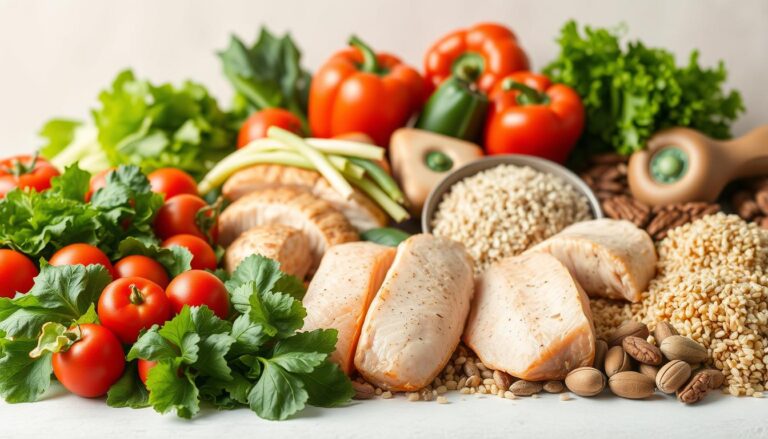
The impact of your overall health have you ever wondered how that works? The foods we eat are essential for maintaining a healthy gut microbiome.
This is because it’s necessary for digestion nutrient absorption and strengthening your immune system.
By adding natural gut healing foods to your diet, you help grow good bacteria in your body. This can lead to better brain function, healthier skin, and overall better health.
Keeping your gut microbiome balanced is crucial for your digestive health. It also helps prevent diseases like IBS, Crohn’s disease, and mental health issues. Choosing healing foods for your gut can fix the gut lining and balance bacteria. This can lead to a healthier, more vibrant life.
Key Takeaways
- Incorporate natural foods for gut health to support beneficial bacteria.
- Balanced gut microbiome enhances digestion and nutrient absorption.
- Gut health impacts brain function, skin health, and immune strength.
- Diseases such as IBS and Crohn’s are linked to gut imbalances.
- Dietary choices can repair the gut lining and improve overall well-being.
The Importance of Gut Health
Gut health is key to feeling good overall. A healthy gut helps with digestion and boosts the immune system. It also helps control inflammation. Eating gut-friendly foods can improve how well your body absorbs nutrients. It can also lower the chance of getting chronic diseases.
Why Gut Health Matters
Our health is closely linked to our gut. An unhealthy gut can cause many problems, like digestive issues and weak immunity. Eating the best foods for gut repair helps fix this. These gut health superfoods protect us from long-term health issues and keep our body systems working right.
The Gut Microbiome Explained
The gut microbiome is a huge community of tiny life forms in our gut. They help break down food, make vitamins, and keep our immune system strong. If this balance gets out of whack, we might not digest food well or get sick easily. So, eating gut-friendly foods keeps our microbiome healthy. This lets our body use nutrients better and handle inflammation well.
Probiotic-Rich Foods
Eating probiotic-rich foods can make your gut healthier. They help your body digest food better and stay healthy. Yogurt and fermented foods are especially good for this.
Yogurt
Yogurt is famous for being a probiotic-rich food. It’s made by adding live bacteria to milk. This makes it taste better and more nutritious. Eating yogurt regularly helps your body digest food better and supports a healing diet for gut health.
Benefits of Fermented Foods
Fermented foods like sauerkraut and kimchi are also full of probiotics. They have lots of good bacteria that help your gut. These foods for digestive healing improve digestion and boost your immune system. They also work well with prebiotics to keep your digestive system healthy.

Prebiotics and Their Role in Digestive Health
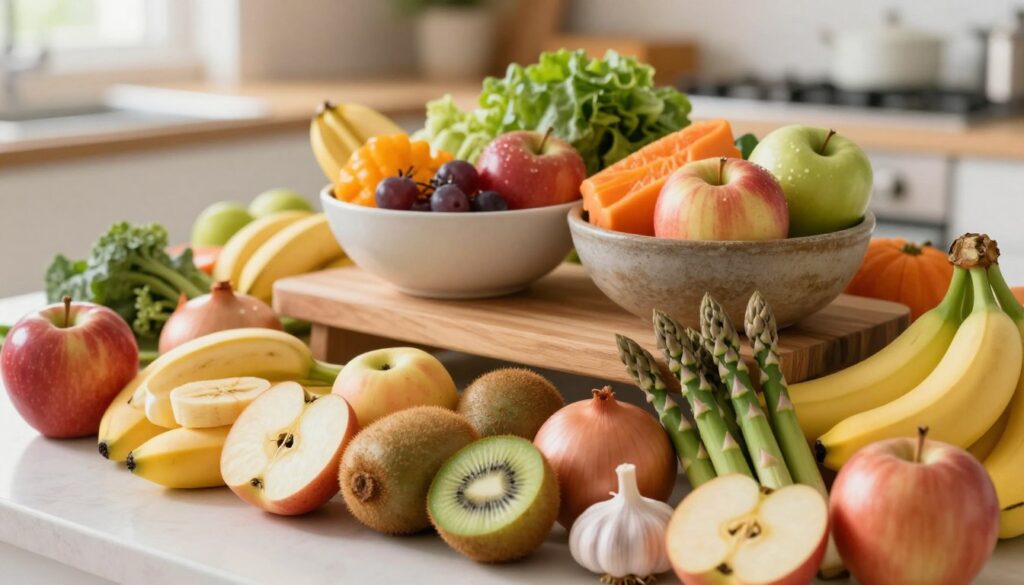
Prebiotic-rich foods are key for our gut health. They have fibers that probiotics need to grow. Foods like garlic, onions, bananas, and asparagus help our digestive system.
Garlic and Onions
Garlic and onions are not just tasty. They’re full of inulin, a fiber that helps our gut. Eating them regularly can make digestion smoother.
Bananas and Asparagus
Bananas and asparagus are great for our gut. They have resistant starch and fiber that our gut needs. Bananas are easy to digest, and asparagus is good for our intestines. Adding them to our meals keeps our gut healthy.
| Food | Key Prebiotic Component | Health Benefit |
|---|---|---|
| Garlic | Inulin | Feeds healthy gut bacteria |
| Onions | Inulin | Supports digestion |
| Bananas | Resistant Starch | Promotes gut flora balance |
| Asparagus | Fiber | Supports intestinal health |
Bone Broth for Gut Lining Health
Bone broth is known for its great impact on gut health. It’s made by simmering bones for a long time. This process extracts collagen, amino acids, and minerals, which are key for gut repair.
It’s considered a top gut health superfood. Bone broth offers many benefits that are crucial for a healing diet for gut health.
Nutritional Benefits
Bone broth is packed with nutrients. It’s rich in collagen, which helps strengthen the gut lining. This reduces the chance of gut permeability issues.
The amino acids, like glutamine, and minerals in bone broth soothe inflammation. They also help balance gut flora. These nutrients reduce inflammation, improve digestion, and boost overall health.
How Bone Broth Works
Bone broth delivers vital nutrients to the gut. The collagen in it helps repair the gut lining. The amino acids aid in tissue repair.
As part of a healing diet for gut health, drinking bone broth regularly is key. It strengthens the gut lining, fights inflammation, and boosts the immune system. This makes it essential for those focused on gut health.
Fermented Vegetables: Sauerkraut and Kimchi
Fermented foods like sauerkraut and kimchi are key for digestive health. They boost the gut microbiome and balance gut bacteria. This is vital for our overall health.
The fermentation process makes sauerkraut and kimchi rich in lactic acid bacteria. These bacteria are great for our digestive system.
Eating sauerkraut and kimchi helps keep our gut healthy and improves digestion. They have enzymes that help break down nutrients. This makes it easier for our body to absorb them.
These foods also support our immune system. They do this by improving the gut microbiota. This is important for fighting off sickness.
Sauerkraut and kimchi are good for reducing inflammation and improving the gut lining. They help keep a healthy balance of gut bacteria. This keeps harmful pathogens away and prevents digestive problems like bloating and constipation.
| Aspect | Sauerkraut | Kimchi |
|---|---|---|
| Probiotic Content | High in lactobacilli | Rich in lactic acid bacteria |
| Main Ingredients | Cabbage, salt | Napa cabbage radish scallions, chili pepper |
| Flavor Profile | Tangy, sour | Spicy tangy, savory |
| Health Benefits | Enhances digestion supports immune health | Boosts digestion rich in vitamins A and C |
Adding sauerkraut and kimchi to your diet can greatly improve your digestive health. They offer many benefits, from better nutrient absorption to immune system support. They are a great choice for a gut-friendly diet.
The Power of Ginger in Digestive Health
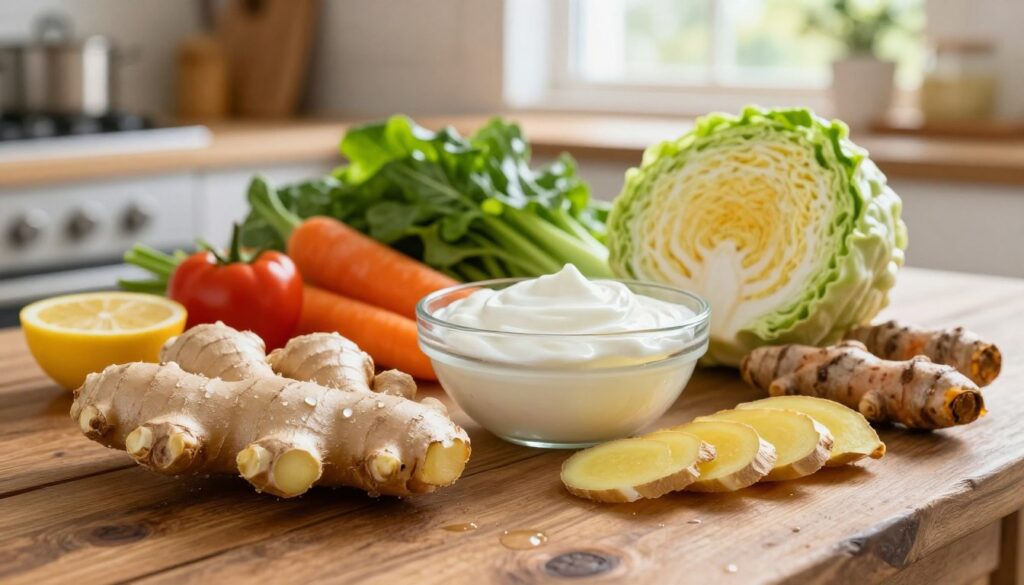
Ginger is known for its great impact on digestive health. It has been used for centuries to soothe the stomach and relieve nausea. It also improves digestion.
Anti-Inflammatory Properties
Ginger’s anti-inflammatory properties are impressive. It contains compounds like gingerol, which are key in an anti-inflammatory diet. These compounds help reduce inflammation in the digestive tract. This can ease issues like indigestion and bloating.
Read more: Sugar Free 7 Day Anti-Inflammatory Meal Plan
Boosting Digestive Enzymes
Ginger also boosts digestive enzyme production. These enzymes are crucial for breaking down food and absorbing nutrients. Adding ginger to your gut health nutrition can greatly improve digestion and overall health.
| Benefit | Details |
|---|---|
| Anti-Inflammatory | Reduces inflammation, relieves indigestion and bloating. |
| Enzyme Production | Increases digestive enzymes, improves nutrient absorption. |
| Nausea Relief | Effectively soothes the stomach and reduces nausea. |
Why You Should Include Natural Gut-Healing Foods
Adding natural foods for gut health to your meals is key for a strong digestive system. These foods help fix the gut lining, support good bacteria, and boost your immune system. Eating healing foods for gut health regularly can improve your health and prevent diseases.
Choosing a mix of gut-friendly foods like yogurt, fermented veggies, garlic, and onions is smart. It keeps your gut microbiome balanced. This not only helps with digestion but also boosts energy, mental focus, and overall health.
Healing foods for gut health offer many benefits. They are full of nutrients and fiber, which help with digestion and absorbing nutrients. This can make you feel happier, reduce inflammation, and improve your skin.
| Food | Gut-Health Benefit |
|---|---|
| Yogurt | Rich in probiotics, supports digestive health |
| Sauerkraut | High in fiber, aids in healthy digestion |
| Garlic | Contains prebiotics, promotes good bacteria |
| Bone Broth | Supports gut lining, provides essential nutrients |
| Ginger | Anti-inflammatory, aids enzyme activity |
Choosing natural foods for gut health is a smart move for better health. It’s a way to invest in a healthier life, starting with your gut.
Fruit & Vegetable Prebiotics
Keeping your gut healthy is key to feeling good. Eating foods rich in prebiotics can boost your digestive system. Let’s look at some foods that help keep your gut in top shape.
Apple Cider Vinegar
Apple cider vinegar is a great prebiotic food. It helps make more digestive juices and stomach acid. This makes it easier to digest food, creating a better home for good gut bacteria.
Read more: Can Apple Cider Vinegar Help You Lose Weight?
Leafy Greens
Leafy greens like spinach and kale are superfoods for your gut. They’re full of fiber, which feeds the good bacteria in your gut. These veggies also have lots of nutrients that help your gut stay healthy. They’re essential for a strong digestive system.
High Fiber Foods and Their Benefits
Eating high fiber foods is key for good digestive health. They help keep your gut balanced, move your bowels right, and stop constipation. Legumes, beans, and whole grains are top choices for fiber.
Legumes and Beans
Legumes and beans are great for gut health. They help with digestion and support a healthy gut by promoting good bacteria. Foods like lentils, chickpeas, and black beans are full of fiber. This is good for your digestive system.
Whole Grains
Whole grains like oats, quinoa, and brown rice are also important. They have more fiber than processed grains. This fiber helps your bowels move well and keeps your gut balanced. Eating different whole grains gives you fiber all the time, which is good for your digestive system.
Anti-Inflammatory Diet for Gut Health
An effective anti-inflammatory diet is key for keeping your digestive system healthy. It helps prevent inflammatory gut diseases. This diet includes foods that naturally heal and soothe your digestive system.
Here are the main parts of an anti-inflammatory diet:
- Fruits and Vegetables: They are full of antioxidants and fiber. Foods like leafy greens, berries, and citrus fruits help fight inflammation.
- Nuts and Seeds: Almonds, walnuts, flaxseeds, and chia seeds are rich in omega-3 fatty acids. These have strong anti-inflammatory effects.
- Healthy Oils: Olive oil and coconut oil are good for your gut. They offer anti-inflammatory benefits that help keep your gut healthy.
Eating a variety of these natural gut healing foods can greatly improve your gut health. Also, avoiding processed foods and sugars helps prevent inflammation. This leads to a balanced and healthy gut microbiome.
Conclusion
Choosing a healing diet for gut health can greatly improve your overall well-being. This article highlights the key role of gut health nutrition. It shows how foods like yogurt and fermented veggies, along with garlic and bananas, help balance your gut.
This balance is crucial for digestion and absorbing nutrients. Adding foods rich in nutrients, such as bone broth and legumes, helps the gut lining. Foods like ginger and apple cider vinegar also boost gut health, showing how gut health affects our overall health.
Diet plays a huge role in gut health, offering a chance to improve your health through food. By adding natural gut-healing foods to your meals, you can support your digestive system. This can prevent diseases and help you live longer.
Starting small with a gut-health-focused diet can bring big benefits. It shows that eating mindfully is key to a healthy life.